TPU 8t Commercial Launch: Can Google’s Custom Silicon Finally Challenge Nvidia’s Moat
Google’s TPU 8t can challenge Nvidia in selected large-scale AI workloads, but it does not need to replace GPUs everywhere to matter. Its strongest opportunity is to make Google’s infrastructure an attractive alternative for customers willing to optimize models and software around a different computing platform.
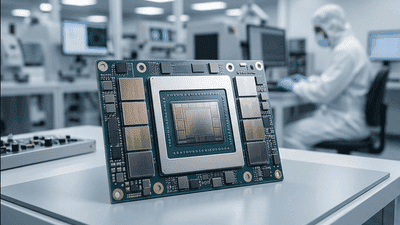
The launch status needs precision. Google announced TPU 8t on April 22, 2026, alongside the inference-focused TPU 8i, with general availability planned for later in the year. The Google Cloud product page available for this article still labels TPU 8t “coming soon.” An announced commercial roadmap is therefore not the same as confirmed broad availability.
The central question is ecosystem. Google has capable custom silicon and a coordinated infrastructure strategy. Nvidia’s advantage extends beyond chips into software, developers, system partners, and the practical ease of deploying AI work.
TPU 8t Is a Training Platform, Not the Whole Eighth Generation
Google divided its eighth-generation TPU family into two purpose-built architectures.
TPU 8t targets large-scale pretraining and embedding-heavy workloads. TPU 8i targets inference.
That distinction matters because training and serving place different demands on computation, memory, latency, and communication.
A claim about TPU 8i’s inference economics should not be assigned to TPU 8t. The broader family can challenge different parts of the AI market, but each product needs its own evidence.
Google Is Not Beginning from Zero
TPU 8t builds on earlier generations of Google’s tensor-processing hardware.
It also benefits from Google’s experience operating AI services and developing models within its own infrastructure.
This gives the company a substantial internal environment in which to refine hardware and software together.
The commercial question is whether that internal strength translates into an accessible platform for external customers. A system that works exceptionally well for its designer still needs tools, support, and deployment options that others can use.
What the Headline Specifications Describe
Google describes a TPU 8t superpod containing 9,600 chips, approximately two petabytes of aggregate HBM, and 121 exaflops of compute capability.
Technical coverage identifies that arithmetic figure as FP4 performance. It should not be compared directly with another system’s higher-precision rating.
The scale is substantial, but the measurement boundary is equally important.
These are superpod-level figures, not specifications for one TPU chip. Mixing per-chip and aggregate numbers can make comparisons appear more decisive than they are.
A Superpod Is Not One Giant Uniform Memory Device

Aggregate memory describes the combined resources of many accelerators.
Data still must be placed, partitioned, and communicated across the system.
A shared programming model can make distributed resources easier to use without making every access equally fast.
For buyers, two petabytes of memory is useful context, but the application’s performance depends on how effectively it uses that distributed capacity. The network and software remain part of the memory story.
Why the Network Is Central to TPU 8t
Large training workloads exchange information across processors throughout execution.
Adding chips expands potential computing resources, but communication overhead can limit the gain.
Google’s technical description says TPU 8t retains a three-dimensional torus topology within the superpod and uses its Virgo network to connect more than 134,000 chips in a single fabric, with up to 47 petabits per second of non-blocking bisection bandwidth.
Those are architectural capabilities, not proof that every model scales efficiently across the maximum configuration.
Near-Linear Scaling Requires More Than Connectivity

A network can provide substantial bandwidth while a workload still encounters synchronization, imbalance, or software limitations.
Model partitioning and execution strategy influence how effectively additional processors contribute.
Data preparation and storage can also prevent the system from staying productive.
For TPU 8t, scaling claims need to be evaluated against named workloads and operating conditions. The most useful result is completed training work, not the largest number of connected chips.
Google Is Selling a System-Level Proposition
TPU 8t sits within Google’s AI Hypercomputer strategy, which combines computing, storage, networking, software, and consumption models.
That is a more comprehensive proposition than a standalone chip.
The objective is to make the surrounding infrastructure reinforce the accelerator’s strengths.
This also reveals the real competition with Nvidia. Both companies are attempting to deliver coordinated platforms, so a processor-only benchmark captures only part of the decision.
Nvidia’s Moat Begins with Developer Familiarity
A computing platform becomes easier to adopt when developers already know its tools and workflows.
Existing libraries, debugging practices, and application code can reduce the effort required to launch new workloads.
That accumulated familiarity creates switching costs even when a competing processor looks attractive.
For Google, the challenge is not merely to offer better hardware economics. It must make the transition sufficiently manageable that customers can capture those economics without disproportionate engineering work.
JAX and XLA Are Part of Google’s Answer
Google’s TPU strategy is closely connected with its software environment, including JAX and XLA.
Compiler-based execution can help map model operations onto the architecture and organize distributed computation.
Cloud TPU documentation also provides guidance about workloads suited to TPU execution and matrix-unit optimization.
The commercial test is accessibility. Customers need a dependable route from their existing models to productive execution, not simply a list of supported software names.
Framework Support Does Not Eliminate Migration Work
A model can depend on custom operators, extensions, numerical assumptions, or distributed execution details.
Those dependencies may require changes when moving to another accelerator.
Correct execution is also different from efficient execution.
For buyers, migration should be assessed using their actual workload. A platform that supports the framework may still need significant optimization before it meets cost and performance expectations.
Training Flexibility Remains Valuable
Research teams revise model architectures and execution strategies.
A broadly programmable platform can make those changes easier.
Custom hardware can still support substantial variation, but its usefulness depends on the operations, compiler, and memory behavior available.
TPU 8t’s challenge is therefore not to become identical to a GPU. It is to support enough relevant flexibility that specialization does not create excessive friction as customers’ models evolve.
Performance per Dollar Needs a Complete Boundary
Google’s announced improvements describe performance relative to previous TPU generations.
They do not automatically establish the same advantage against every Nvidia system.
A useful economic comparison includes the accelerator configuration, software, memory, networking, utilization, and the service requirements being met.
For training, time to a valid result matters. A lower hourly price can be less attractive if the job takes longer or requires substantially more development support.
Numerical Precision Can Change the Comparison
FP4, FP8, BF16, and other formats have different representation characteristics.
A workload must use the chosen format without unacceptable effects on the intended result.
Peak arithmetic ratings also depend on what operations are counted.
For TPU 8t versus GPU comparisons, model quality and convergence need to remain visible. A faster calculation is not a better training outcome if it changes the result beyond acceptable limits.
Availability Can Matter More Than a Benchmark
A customer needs access to suitable capacity at the time its project requires it.
Regional availability, allocation, pricing, and support all influence that access.
An announced product can be strategically important while remaining difficult to obtain broadly.
For this reason, the “commercial launch” should be tracked through explicit availability milestones. Interest forms, development announcements, and technical presentations should not be treated as equivalent to unrestricted production access.
External TPU System Sales Are a Separate Development
Reporting on Alphabet’s second-quarter 2026 discussion described TPU systems being delivered to customer data centers.
It also said most revenue from existing system-sale agreements was expected in 2027.
That indicates a broader commercial route beyond ordinary cloud consumption.
However, the reporting does not establish that all those deliveries were TPU 8t systems. Product generation, delivery model, and revenue timing need to remain distinct.
Google Can Sell TPUs and Nvidia Capacity Simultaneously
Google Cloud offers Nvidia-based infrastructure as well as its own accelerators.
The eighth-generation TPU announcement therefore represents an expansion of choices rather than a declaration that every customer should leave GPUs.
Launch reporting explicitly described the custom chips as supplementing Nvidia-based systems.
That mixed approach can be commercially rational. Different workloads and software environments can justify different architectures within the same provider.
The Customer’s Lock-In Trade-Off Changes
Moving away from one accelerator ecosystem can reduce some dependencies while creating others.
Cloud services, software integration, data placement, and operational processes can make later migration difficult.
A customer may gain hardware choice without gaining complete portability.
For procurement strategy, the useful question is where switching costs reside. Attractive near-term economics should be evaluated alongside the effort required to move workloads again.
Power and Manufacturing Still Shape the Ramp
Large TPU systems require qualified chips, memory, packaging, servers, power, and cooling.
Constraints in any stage can affect deployment timing.
A custom architecture does not remove dependence on the manufacturing and infrastructure ecosystem.
For forecasts, available silicon and productive computing capacity should remain separate measures. The building and operating environment must be ready before the hardware can deliver its intended value.
What Would Show Nvidia’s Moat Is Narrowing?
The strongest evidence would connect TPU capability with repeat external adoption.
- Confirmed TPU 8t availability in relevant deployment regions.
- Independent workload results under comparable conditions.
- Manageable migration for important customer applications.
- Competitive total cost rather than selected peak ratings.
- Reliable scaling and sustained utilization.
- Repeat customer commitments across generations.
- A broader developer ecosystem beyond Google’s internal use.
These measures would show whether the platform is becoming a durable alternative rather than only an impressive technical option.
A Challenge to the Moat, Not Its Immediate Collapse
TPU 8t strengthens Google’s position in large-scale AI training through specialized hardware, substantial system resources, and coordinated software.
It also makes the competitive market more credible for customers prepared to optimize around another platform.
Nvidia’s advantage will not disappear because Google announces a faster superpod. The meaningful challenge comes when customers can access, adopt, and repeatedly use TPU systems at attractive total cost. That is where custom silicon becomes commercial leverage—and where an ecosystem moat can begin to narrow.